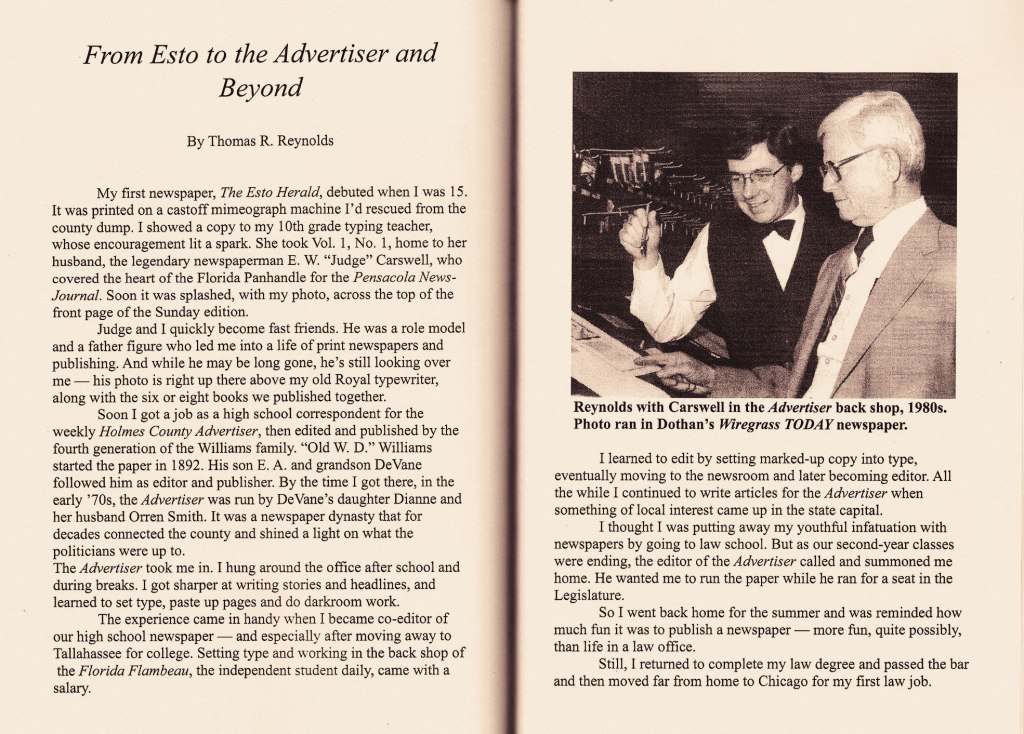
An excerpt from “Life in Print News,” compiled by Sue Riddle Cronkite, published December 2025.

PERSONAL HISTORY | THOMAS R. REYNOLDS

My first newspaper, The Esto Herald, debuted when I was 15. It was printed on a castoff mimeograph machine I’d rescued from the county dump. I showed a copy to my 10th grade typing teacher, whose encouragement lit a spark. She took Vol. 1, No. 1, home to her husband, the legendary newspaperman E.W. “Judge” Carswell, who covered the heart of the Florida Panhandle for The Pensacola News-Journal. Soon it was splashed, with my photo, across the top of the front page of the Sunday edition.

Judge and I quickly become fast friends. He was a role model and a father figure who led me into a life of newspapers and publishing. And while he may be long gone, he’s still looking over me — his photo is right up there above my old Royal typewriter, along with the six or eight books we published together.

Soon I got a job as a high school correspondent for the weekly Holmes County Advertiser, which was then edited and published by the fourth generation of the Williams family. “Old W.D.” Williams started the paper in 1892. His son E.A. and grandson DeVane followed him as editor and publisher. By the time I got there, in the early ’70s, the Advertiser was run by DeVane’s daughter Dianne and her husband Orren Smith. It was a newspaper dynasty that for decades connected the county and shined a light on what the people and the politicians were up to.

The Advertiser took me in. I hung around the office after school and during breaks. I got sharper at writing stories and headlines, and learned to set type, paste up pages and do darkroom work. The experience came in handy when I became co-editor of our high school newspaper — and especially after moving away to Tallahassee for college. Setting type and working in the backshop of the Florida Flambeau, the independent student daily, came with a salary. I learned to edit by setting marked-up copy into type, eventually moving to the newsroom and later becoming editor. All the while I continued to write articles for the Advertiser when something of local interest came up in the state capital.

I thought I was putting away my youthful infatuation with newspapers by going to law school. But as our second year classes were ending, the editor of the Advertiser called and summoned me home. He wanted me to run the paper while he ran for a seat in the Legislature. So I went back home for the summer and was reminded how much fun it was to publish a newspaper — more fun, quite possibly, than life in a law office.

Still, I returned to complete my law degree and pass the bar, and then moved far from home to Chicago for my first law job. Being in a big city and living in a high-rise on the lakefront was a great adventure. The work was engaging and I was making new friends. But I was drawn toward reporting and publishing — and toward home.

“Come back before you forget,” Judge wrote. So I did.

For the next five years, Judge Carswell and I ran our own little publishing empire. He’d grown up just south of Esto, my hometown, and he’d been covering our neck of the woods for 50 years by then. He’d found a way to stay at home in our rural area where not much big news ever happened, yet become a respected reporter and columnist for the biggest and best daily newspaper in northwest Florida. He knew the people and the place. He was, he acknowledged, “in the briar patch.”

Judge could write a straight news story, if something actually happened, or spin an entire column about the changing of the seasons.

“One of this area’s non-celebrated harbingers of spring is the water moccasin,” he’d start, and off he’d go.

“Dog Days are upon us,” he began another column. “They comprise summer’s doldrums, a sultry season marked by hot muggy weather that saps life’s ambition right out of a person. Several of my friends, who say I should know about such things, have called to ask when Dog Days will end. I couldn’t even tell them when they began.”

We published a series of books featuring his columns, including Commotion in the Magnolia Tree, He Sold No ’Shine Before Its Time and Tales of Grandpa and Cousin Fitzhugh. We also published a history of our hometown titled Esto: This Is the Place. And then, our most ambitious work, a comprehensive history of Holmes County we called Holmesteading

As we were getting Holmesteading ready for publication, I was invited to California to interview for a legal publishing job. I went, even though I had no intention of taking the job. Then late one night, back in the Advertiser’s familiar backshop, setting type and pasting up then final pages of our book, I realized I should go.

Judge gave his blessings this time. In his inscription to Holmesteading, he wrote that our collaboration “has made this and other publication adventures possible. And it has been fun. My best wishes go with you always.”

Time and fortune were in my favor. Legal journalism was just being born, and I was able to combine both interests. I became editor and publisher of California Lawyer, a monthly magazine. Later we launched the San Francisco Daily Journal, which covered the courts and the legal profession. It was a tough audience and a competitive market, but a fun and rewarding ride.

The best was yet to come. My more talented wife, the lawyer-author Barbara Kate Repa, and I bought The New Fillmore, a community newspaper in one of San Francisco’s finest neighborhoods, where we lived and had become deeply engaged. I ended up with the best of both worlds: our own small town newspaper in heart of a big city filled with interesting people and places.

All along I’ve kept up my subscription to the Holmes County Advertiser, even as it has been passed around among various owners and encroaching chains. It was threatened with competition a few years ago when the owners of the Washington County News in a neighboring county started a rival paper in Holmes County they called the Times. New chain overlords combined the papers as the Times-Advertiser.

That rankled me. Sometimes the paper, under ever-changing ownership — Freedom to Gatehouse to Gannett and others — seemed to have more editors and publishers than local content. Finally yet another new publisher settled on a name change. The paper would be called simply the Holmes County Times.

I nearly jumped out of my chair when the first issue arrived sporting a new nameplate. I wrote an angry email to the new editor decrying the change and canceling my lifelong subscription. Fortunately, I showed it to my wife before sending it. She laughed and said: “You’d die if you didn’t get the Advertiser in the mail every week.”

So I rewrote the email, pointing out the paper had been the Advertiser for more than 100 years by then, and urged them to reconsider.

To her everlasting credit, the new editor called and said: “I think we made a mistake.” And she persuaded the new publisher they should promptly rename it the Holmes County Advertiser, as it has been known since 1892 — at least when it wasn’t called the Aggravator or the Agitator.

Critics used to say: “Read the Advertiser and eat a bowl of grits — you’ll have nothing in your stomach and nothing on your mind.” But I still get excited when the Advertiser lands in our mailbox, especially now that it’s back under local ownership. I still write an article or a column now and then when something from home catches my attention.

And The Esto Herald continues, 55 years after the first issue. But now it’s online.

— Excerpted from Sue Riddle Cronkite’s latest book, “Life in Print News,” available here, which tells the tale of her odyssey at newspapers from Holmes County to Birmingham and back again, with contributions from many others she’s met along the way.
LOCAL HISTORY | E.W. CARSWELL

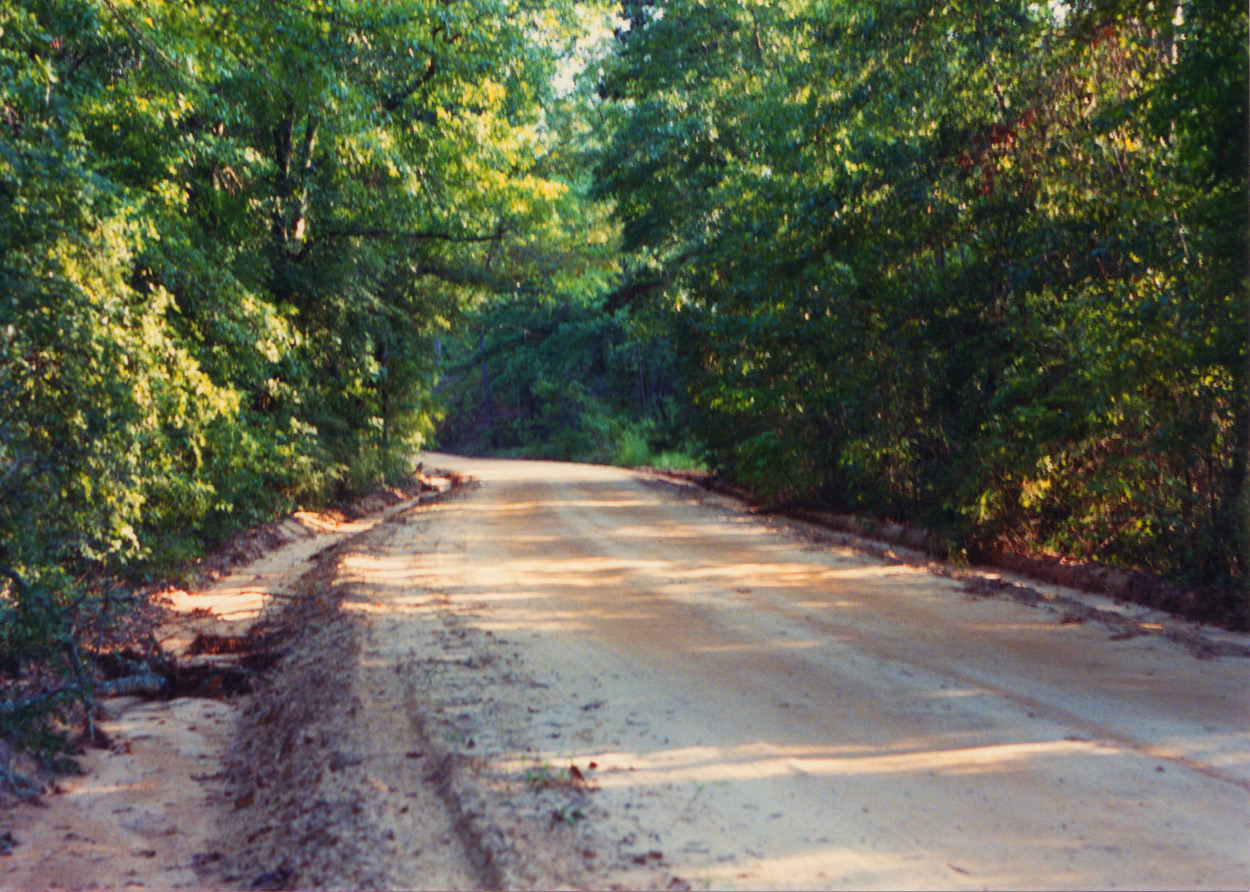
State Road 2 — one of the key roadways into Esto — was the product of a political promise. The promise was made in 1936 by gubernatorial candidate Fred P. Cone to E.A. Williams Sr., then editor and publisher of the Holmes County Advertiser.

E.A. Williams Jr., a youthful apprentice printer then in the employ of his father, in 1990 recalled hearing Cone make the promise. “I was busy setting type nearby when Cone came to the Advertiser office to seek my father’s support,” said the junior Williams, who within a few years was to become Bonifay’s postmaster.

He said his father didn’t specifically make building a bridge over the Choctawhatchee River the price of his support, but extracted the promise in response to his request that Cone help unify the county. His father explained that the county had historically had been divided by the river. The only bridge then spanning the river was in the Caryville-Westville area. The river was crossed elsewhere on ferries.

The senior Williams told Cone that the absence of bridges forced citizens on opposite sides of the river to travel many miles over dirt roads to reach the opposite side of the county. Cone, without hesitation, promised the bridge would be built. And it was.

State Road 2, which is routed to roughly parallel the Alabama-Florida line across West Florida, was completed just before World War II through Jackson and Holmes counties. It then provided east-west access to Graceville, Campbellton and Malone in Jackson County; to Noma, Esto, Pittman and New Hope in Holmes County; and to Darlington beyond in Walton County. The road was popularly known as the “Hog and Hominy Route” because it traversed an agricultural region known for its production of corn and hogs, as well as cotton, peanuts and watermelons.

In Holmes County, State Road 2 was routed along the course of an earlier dirt-surfaced “hard road” built in about 1920 to accommodate the growing demands of automobile owners. That road had bypassed Noma by a half mile, and downtown Esto by about three-fourths of a mile, prompting predictions that the respective communities would gradually grow or move southward to meet State Road 2.

Esto, in the meantime, has grown southward along State Road 79. Several businesses have grown up near the intersection of Highways 2 and 79, known as Holland Crossroads. Town officials, foreseeing the course of growth, extended the town’s corporate limits nearly all the way down to the crossroads.

The Esto water tower in the snow.

FOR DECADES to come, people will remember the time Esto got six inches of snow — the most in the recorded history of the town — during the Great Panhandle Snowstorm of January 2025.

Snow at John Clark Park.

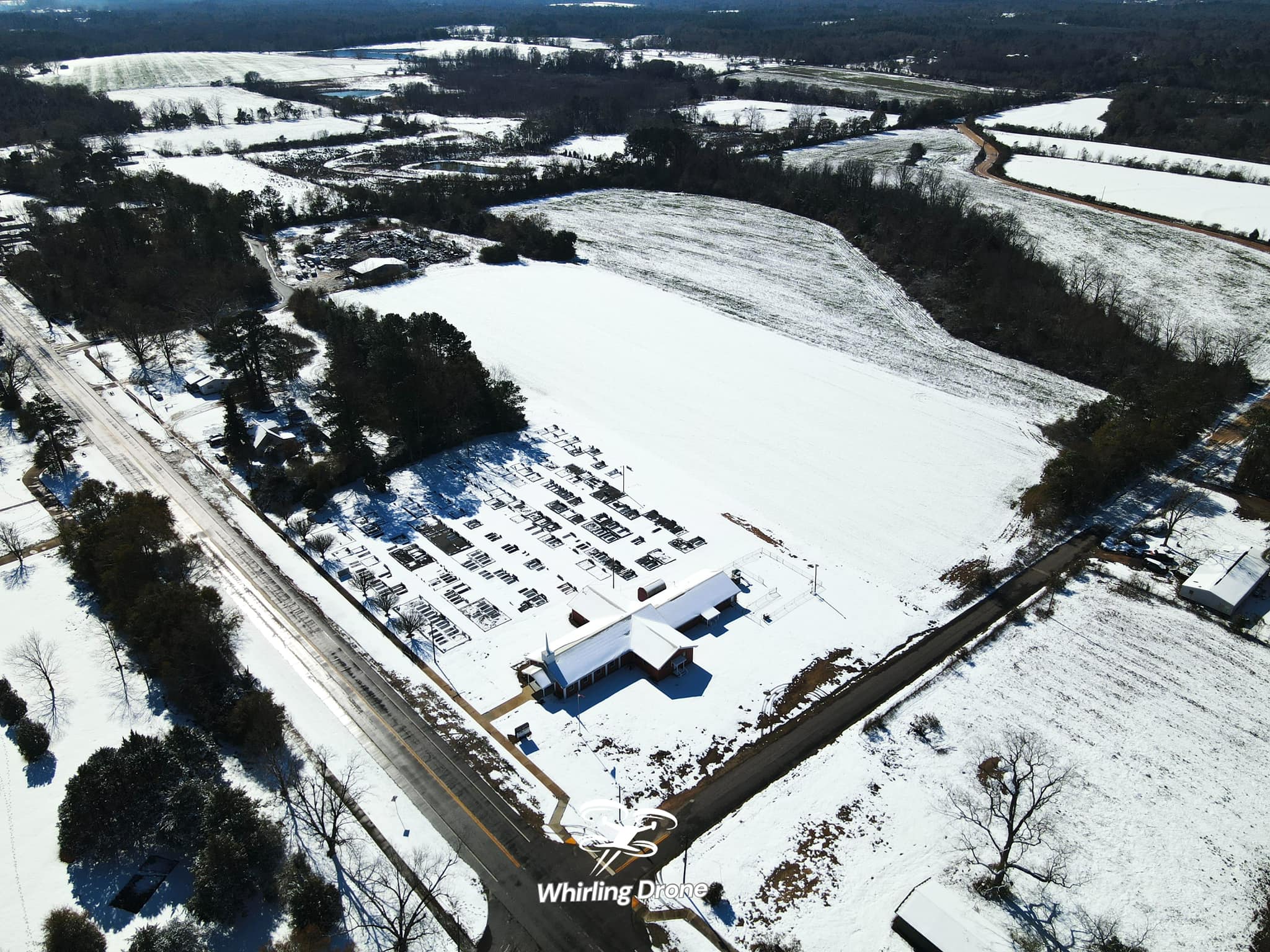
Snow covered Esto Baptist Church and the community cemetery next door.
Remembering with pleasure a time we would not go back to, even if we could.

READING HAZEL TISON’S new book over Thanksgiving weekend provided an extra helping of reasons to be grateful for growing up in Holmes County.

Put More Water in the Soup is the second collection of her columns published in the Holmes County Advertiser over the two decades since she retired as an English teacher at Bonifay Middle School. As the title suggests, most home folks were poor but hospitable. 

Still, she’s not eager to relive the good old days.

“A definition of nostalgia I like,” she writes, “is remembering with pleasure a time we would not go back to, even if we could.”

This book — like her first collection, Better Times a Comin’, from two years ago — is full of familiar names and places and simple pleasures. She fondly recalls sitting on the front porch as a newlywed and learning from a group of older ladies “who was who and what was what” and “who had a baby too few months from the wedding date.”

She has lived all of her 93 years near Bonifay and taught many middle school students from Esto. As a child herself, growing up on Route 1, she writes: “We didn’t quite live on God’s Little Acre, but we weren’t too far from Tobacco Road.”

She remembers when Saturday was the big day in town.

“Stores stayed open until 9 p.m. Farmers and others came into town to shop at Evans and Joe Scheinburg’s, which were almost institutions,” she writes. “Parking along Waukesha was on a slant, no parallel parking. Many people drove downtown on Saturday just to sit in the car and watch the people.”

She captures the way the locals talked, and some of their unusual sayings and words, including “terreckly.”

“There was a fair amount of difference,” she writes, “in ‘terreckly,’ which meant ‘maybe I’ll get around to it after a while,’ and ‘directly,’ which I thought meant right away.”

Put More Water in the Soup is available locally at Pepper Town Market in Bonifay, or on Amazon

Trains were important, the book notes, for hauling timber cut from the virgin forests in Holmes County.
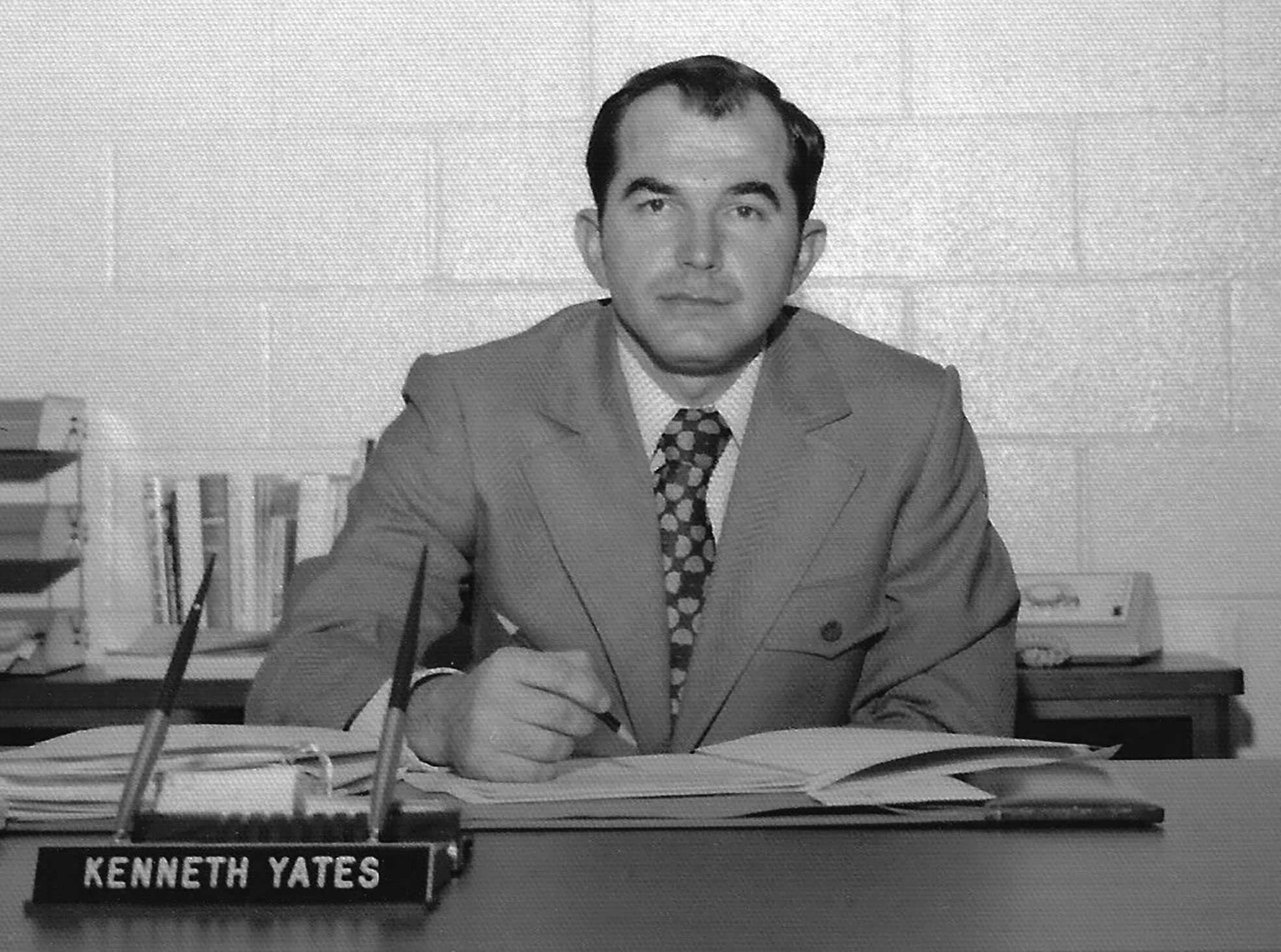
For decades, Kenneth Yates was principal at Poplar Springs and Bonifay Elementary School.

FEW HAVE TOUCHED more young lives in Holmes County than Ken Yates. Or possibly more adult lives, either.

He was honored last Sunday for playing the organ at First Baptist Church in Bonifay for 70 years. One might guess the ever-youthful Mr. Yates must have started before he was born.

In fact, he started at 14. He and young Dianne Williams — later as Dianne Smith a revered high school English teacher — played for Sunday night services.

Along the way he set out to find the church a respectable pipe organ. He heard the old First Presbyterian Church building in Pensacola was being torn down. So he arranged, for $400, to have its organ brought to Bonifay — where, as it happened, mighty First Baptist was just about to build and occupy a grand new sanctuary. The organ, and Mr. Yates himself, have been installed there ever since.

“I’ve had a wonderful time, and it started innocently,” he said when he finally rose from the bench and leaned on the organ to speak on Sunday morning. There wasn’t a lot to do in Bonifay on Sunday afternoons when he was growing up two blocks from the church. One Sunday he wandered in while Dianne Williams was practicing for that night’s service.

“Don’t you play the piano?” she asked.

He had taken a few lessons, and he did play the bass drum in the high school band, but was not a trained musician — and in fact has never had a formal organ lesson. But the Bonifay Baptists acquired a modest organ in the 1950s “because the Methodist church bought an organ,” Yates cracked. “They had money.” He asked Miss Mary Coleman, the church’s retired organist and a longtime 4th grade teacher, to meet him after school to show him the basics.

“That’s how it all started,” he said, recalling his first offertory song: “Nobody Knows the Trouble I’ve Seen.”

In addition to being a natural musician, he was a good student. He went on to Chipola and then to Florida State, where he got his bachelor’s degree. After teaching for a year in Marianna, he went back to FSU for a masters in educational administration and supervision. During his internship at a Pensacola high school, he was lured home to become the principal at Poplar Springs. He was almost as young as his students.

“Sitting in this room are people from way back,” he told the congregation. “Some of you have gotten older than I am — I don’t know how you did it.”

Yates went on to serve for two decades as principal of the modern new Bonifay Elementary School and implemented all sorts of innovative programs. Students and teachers loved him, and parents did, too. Eventually he got kicked upstairs to the county office and kept stirring the pot until his retirement. Then he started volunteering at the hospital and nursing home and as a teacher at the new state prison built just south of town.

“I taught school and I taught prison,” he said. “There wasn’t a lot of difference.”

Through it all, he’s kept playing the organ at First Baptist Church.

“This was on the side,” he said. “But I felt just as committed to what I did here.”

I GOT A special bonus when the Holmes County Advertiser arrived this week. Tucked inside was a copy of The Graceville News, including a special section congratulating this year’s graduating classes at the local schools.

The paper was intended for Roy Price, who lives just down the coast. Before I sent it on, I took a look. After all, people in Esto often went to Graceville when we “went to town.” It had the closest Piggly Wiggly.

I especially enjoyed a column headlined “The Graceville I Knew,” which described pretty much the same Graceville I knew — the soda fountains at Service Drug Store and Cash Drug Store, the Jones Theater, the American Legion pool. Added columnist Bill Clark: “Once in a while we got to travel up to Dothan for special outings” like bowling or a big-screen movie at the Martin Theater.

That was “going to Dothan,” 30 miles over the Alabama state line, rather than “going to town,” which to those of us in Esto usually meant Graceville or Hartford, Alabama, both about 10 miles away.

A lot of the advertisers in the special graduation section were familiar: the Pig, Circle Grill, Rex Lumber, Woodham Peanut Plant, West Florida Electric, the churches, the politicians and the funeral home. Some mainstays were missing, including Henry Arnold Ford and Jones Motor Co., which sold Chevrolets and Cadillacs. Graceville had its prosperous side and was said to be the smallest town in the country with a Cadillac dealership. I used to walk into the showroom and dream. One time a salesman told me I had good posture, which made me stand up even straighter, then and now.

This year’s graduates look full of promise in their senior pictures, formal in black dresses or tuxes with black bow ties. I was surprised to see an identical number of students graduating from both Graceville School and from Poplar Springs High School, which has doubled in size since our growing-up years. Graceville’s graduates are now mostly black, Poplar Springs’s still almost all white.

I mailed his paper on to Roy Price in Ventura with a note confessing I’d taken a look. I told him: “Perhaps like you, I’m happy to live in California, but still consider the Panhandle home.”

Red and Micki Balaban on their cattle ranch near Bonifay.

MICKI BALABAN, who helped found the Spanish Trail Playhouse in Chipley in 1962 while raising her family on a cattle ranch outside of Bonifay, died on May 4 near her longtime home in Connecticut. She was 94.

She and her husband Leonard, also known as Red, came to Bonifay in 1952 and bought an 800-acre farm northeast of town on the Poplar Springs Road. They and their children, Mike, Steve and Rachel, became a vital part of the community before moving back north in 1967.

They remained in touch with friends here long after they left. Their farm, which they called Lookout Plantation, was later divided into smaller parcels, but is still known by many as the old Balaban place.

News of her death posted online by her children brought an outpouring of happy memories and comments from around the country, and from Bonifay.

“She was a special lady,” Martha Cullifer Howell commented. “She left her mark on us here in Bonifay.”

“As a child, I would be with my mother when your mother and my mother would visit in the stores in Bonifay,” wrote Amalia Quattlebaum. “Your mother was like a breath of fresh air when she entered a room.”

Wrote retired educator Sheri Curry Brooks: “When we were growing up, I thought she was such a beautiful, exotic lady. I remember her teaching us tap dancing one summer. She was such a fun lady as well as beautiful.”

Her son Mike told more of her story:

“Micki Israel Balaban was an only child born in Providence, RI, in 1929, during the Depression. Her family life was a bit suffocating, so she couldn’t wait to become an adult and get away. Marrying my dad accomplished that.

“She was smart and talented. She wrote her high school senior play, starred in all her college theatrical productions at Pembroke College, Brown University’s women’s school, and, as a senior, was offered a Marshall scholarship to study acting at the Young Vic Theater in London. She turned it down.”

Instead, she married Lennie Balaban. They met as students at Brown, in Rhode Island, and later moved to Gainesville, where he studied animal husbandry at the University of Florida extension. He had decided to become a cattle rancher, escaping the expectations of his own family — especially his movie mogul father, Barney Balaban, president of Paramount Pictures. His ranch in Holmes County became renowned for its 300 head of purebred American Angus cattle.

Micki Balaban helped found the Spanish Trail Playhouse and directed and starred in many of its productions before she and her family returned to New England in 1967. The playhouse closed in 1968, but was resurrected in 2006 and continues today.

Micki went on to establish another theater company in Connecticut and became a skilled high school counselor.

Red became a well-known jazz musician, playing the Dixieland jazz he had taught himself on the farm in Bonifay. He led a rotating all-star group at Eddie Condon’s jazz club in Midtown Manhattan, which he owned and operated for a decade.

“She was a force,” Rachel Balaban wrote in announcing her mother’s death. “She touched people in profound ways and made them feel seen and heard.”

A celebration of life service will be held in Connecticut in August.

EARLIER: Our own ‘Green Acres’

The Balabans owned a cattle ranch outside Bonifay they called Lookout Plantation.

ESTO HAD NO Jews or Catholics when I was growing up, and nearly no Yankees or Republicans. The same was true for most of Holmes County. But there was one Jewish family, the Balabans, who owned a farm outside the county seat of Bonifay.

Steve Balaban was in our class from first through sixth grade, when his family moved north. He had an older brother, Mike, and a younger sister, Rachel.

I always wondered how they ended up in Bonifay — even more so after reading last fall about their Aunt Judy Balaban’s death in the Hollywood Reporter. During her glamorous long life she dated actors Montgomery Clift and Merv Griffin, married Tony Franciosa and was a bridesmaid at Grace Kelly’s wedding to Prince Rainier of Monaco. Her father, Barney Balaban, was president of Paramount Pictures from 1936 to 1964. Her brother Red Balaban was a noted jazz musician. The actor Bob Balaban is her first cousin.

I wanted to know more. Fortunately, Steve and I reconnected last year while we were planning our 50th high school reunion. It seemed a little strange that someone who’d left long before we graduated would be interested in the reunion. But it soon became clear that Steve had fond and formative memories from his early years in the county, and so did the rest of his family.

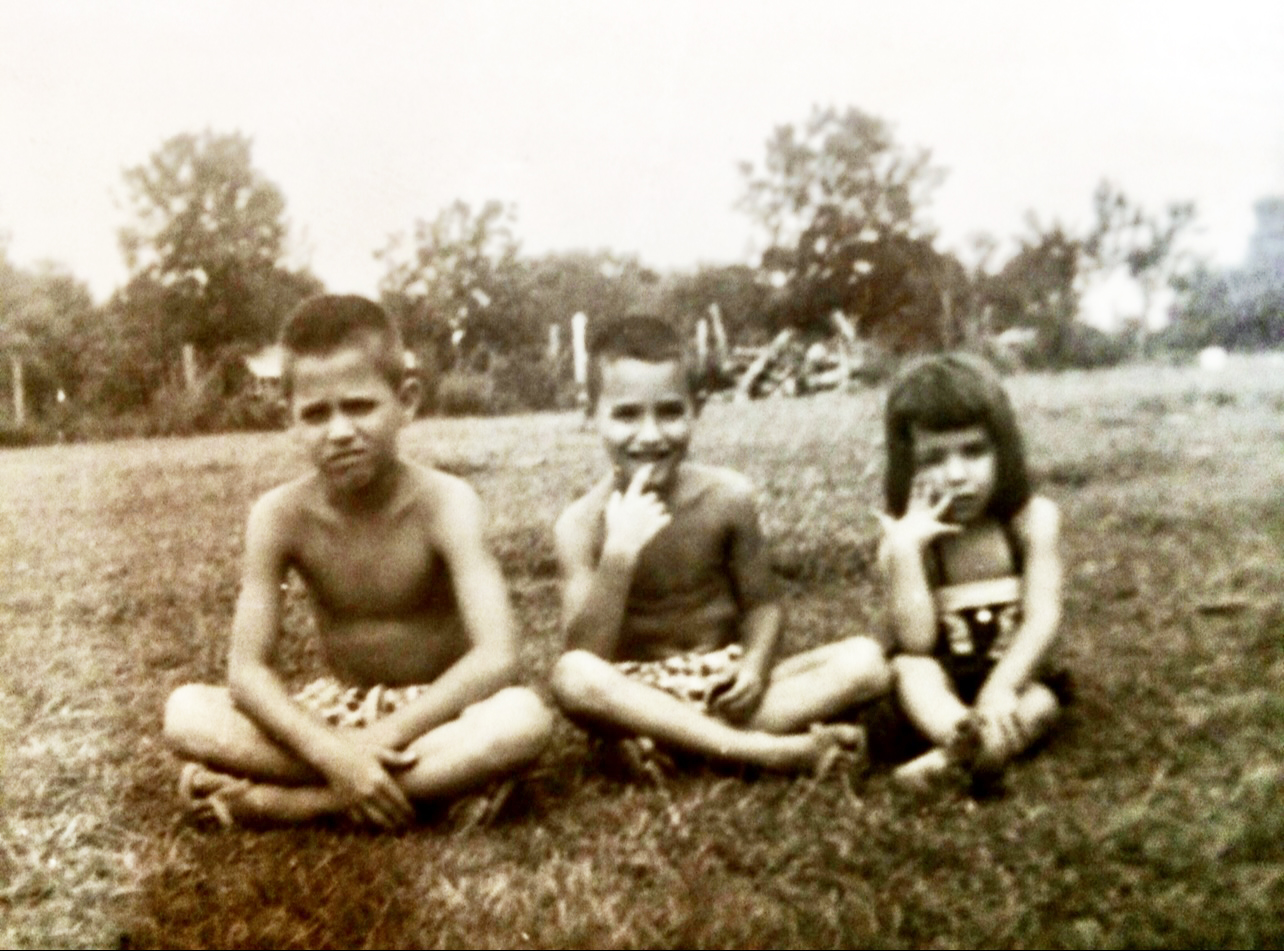
Mike, Steve and Rachel Balaban growing up on the farm.
Read More
At a fish fry with stepsister Cindi and stepbrother Wayne in his barn.

I COMPLAINED that nobody has a fish fry anymore when I’m home in Esto, our traditional excuse for getting together with kinfolks and neighbors. My stepbrother Wayne said he still fished — just come on by on Saturday night. And so we did.

Wayne fries fish — plus French fries and hush puppies, of course — out under the barn in his back yard. It’s just up the Old Esto Road and across the state line in Black, Alabama. He invited some of his buddies from the Black Volunteer Fire Department, too, and we had a feast.

After we’d eaten, one of the firemen edged over to ask, “So you live in San Francisco?” Uh-oh, I thought, here we go with the gays again. But the bogeyman had changed. He fairly hissed: “Isn’t that where Nancy Pelosi is from?”

Wayne’s wife Lynne suggested a photo and slyly posed us in front of an Alabama banner with the stars and bars. “Show that to Nancy Pelosi,” said Wayne.

Frying fish and hush puppies under Wayne’s barn.

That was in 2018. Wayne promised there’d be more fish to fry when I made it home again. When I finally got back last fall, he had been diagnosed with lung cancer, the same fate that befell his father, Bill Henderson, my stepfather, after a lifetime of smoking. Bill insisted as he was dying that smoking had nothing to do with his medical problems and that if he had it all to do over, “I’d smoke ’em all again.” I asked Wayne if he felt the same. “I’d smoke one right now from here out to the highway,” he said as we sat on his front porch watching the sun set.

Our sister Cindi called to say that Wayne died this afternoon. I will miss him, and his hush puppies, and the way we managed to keep a connection despite the great distance between us.

Hush puppies hot out of the fryer.

OBITUARY: Wayne Edward Henderson (1950-2024)

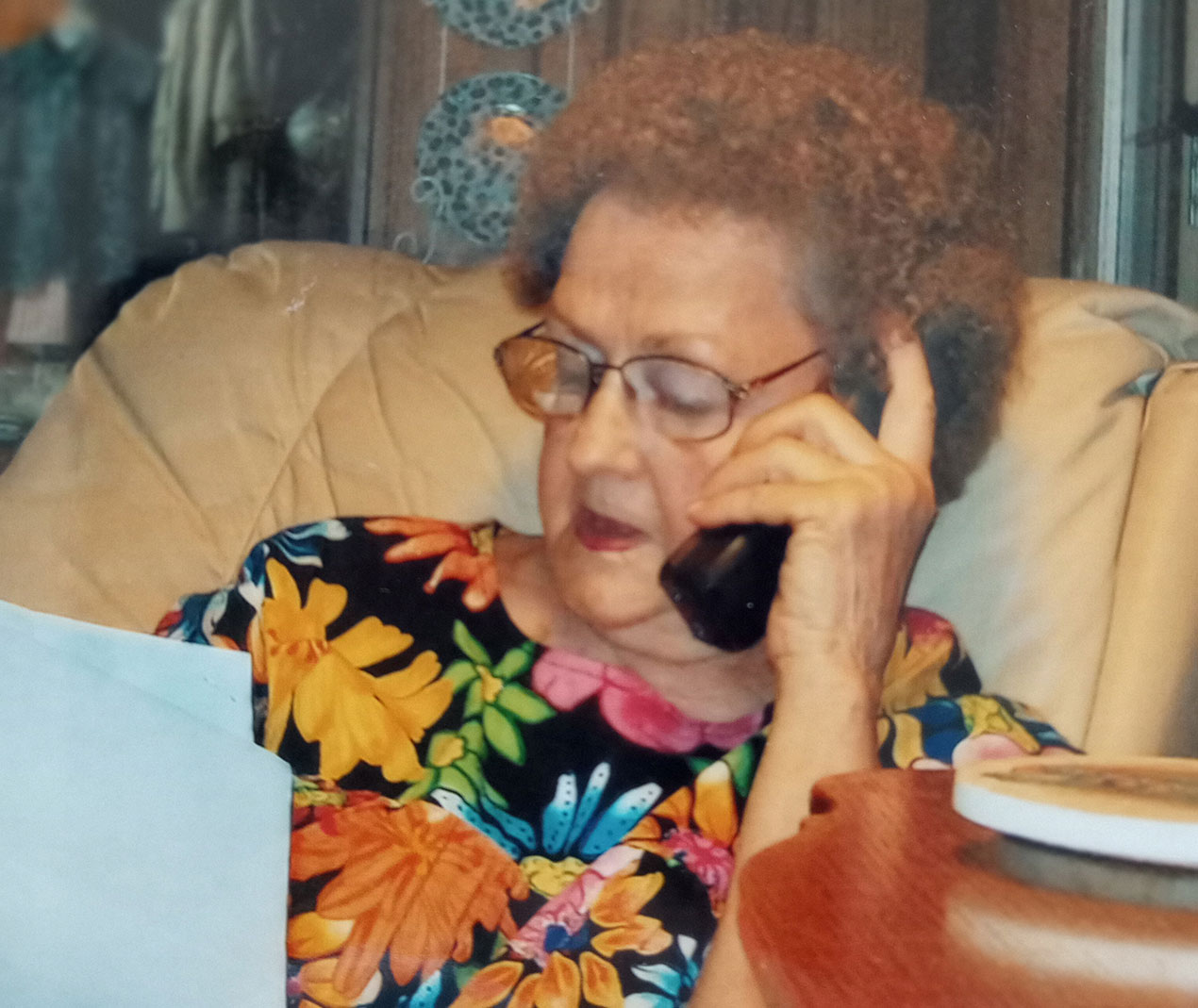
Hazel Tison, fresh from the beauty shop, works on her column for the Advertiser.

A MEMORY | HAZEL WELLS TISON

My sister Minnie Lee and I were one year apart in age, she being the older. We were about 16 and 17, both dark-haired, brown-eyed southern girls.

In the fall, when the cane had been harvested and the syrup-making finished, Daddy was taking a pickup load to sell in Pensacola. He allowed Minnie and me, along with cousin Lenora, to go with him. We spent the night there with some of his cousins — and, wonder of wonders, he took us shopping in downtown Pensacola on old Palafox Street. I don’t recall what all we were able to buy, but I know we each got a new dress. Mama had always pretty much dressed us alike. A lot of folks thought we were twins. I was younger but a bit taller and skinnier, while my sister was more shapely. She also had thick, well-managed hair, while mine was fine and wispy. It was the ’40s and glitz was being worn for casual wear, so we bought similar but not identical dresses, off-white and trimmed at the shoulders in gold sequins.

Our older brother Perry was dating Hester Lucas of Esto at the time. One Sunday evening he was attending a sing at Esto Baptist Church with her and he invited (or perhaps allowed or tolerated) his younger sisters to go with him. It was a golden opportunity to wear our new gold-trimmed dresses. We sang along with the southern gospel songs, with which we were very familiar. I don’t remember meeting any of the nice folks of Esto, though I am sure we did.

Later we got a report from Hester’s mother, Miss Pauline, that a group of the ladies were discussing the attendance of the Wells girls at the Esto sing and expressing their opinions about which one was the prettiest. Here was the conclusion of one of the Esto ladies: “Well, I thought that littlest one was the prettiest. Oh, she had that little ol’ mess of hair, but it just became her.”

That’s my Esto story. It has always been an apt description of my “little ol’ mess of hair.” That is why I resolved a long time ago that if I ever could afford it, I was going to the beauty shop every week. Don’t expect to find me at home on Thursday afternoons at 1:30.

Hazel Wells Tison, a retired teacher, is a longtime columnist for the Holmes County Advertiser and the author of Better Times a Comin’.