A taste of childhood
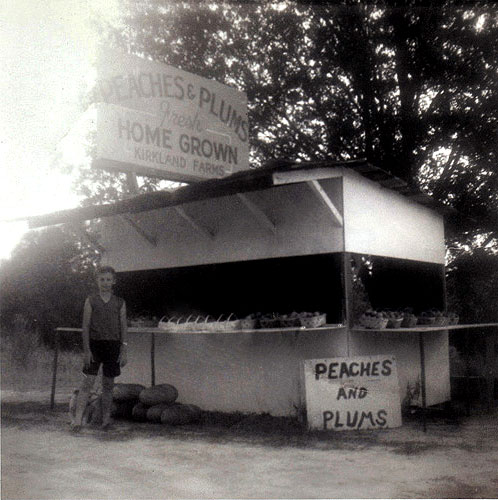
ESTO WENT PEACH CRAZY for a few years in the 1960s and early ’70s. U.T. Kirkland led the move, encouraged by his brother Carson Ray, who lived in Georgia. Several other farmers got peach fever, too, and Esto became known for its peaches.
One of T’s peach patches was in front of our house, just across a two-rut sandy lane. On the other side it faced the main highway that ran through town. Across Highway 79 he built a little wooden fruit stand with fold-down sides for selling peaches and plums from Kirkland Farms. He gave me my first job running it when I was 8. I wasn’t much of a field hand, but I could make change.
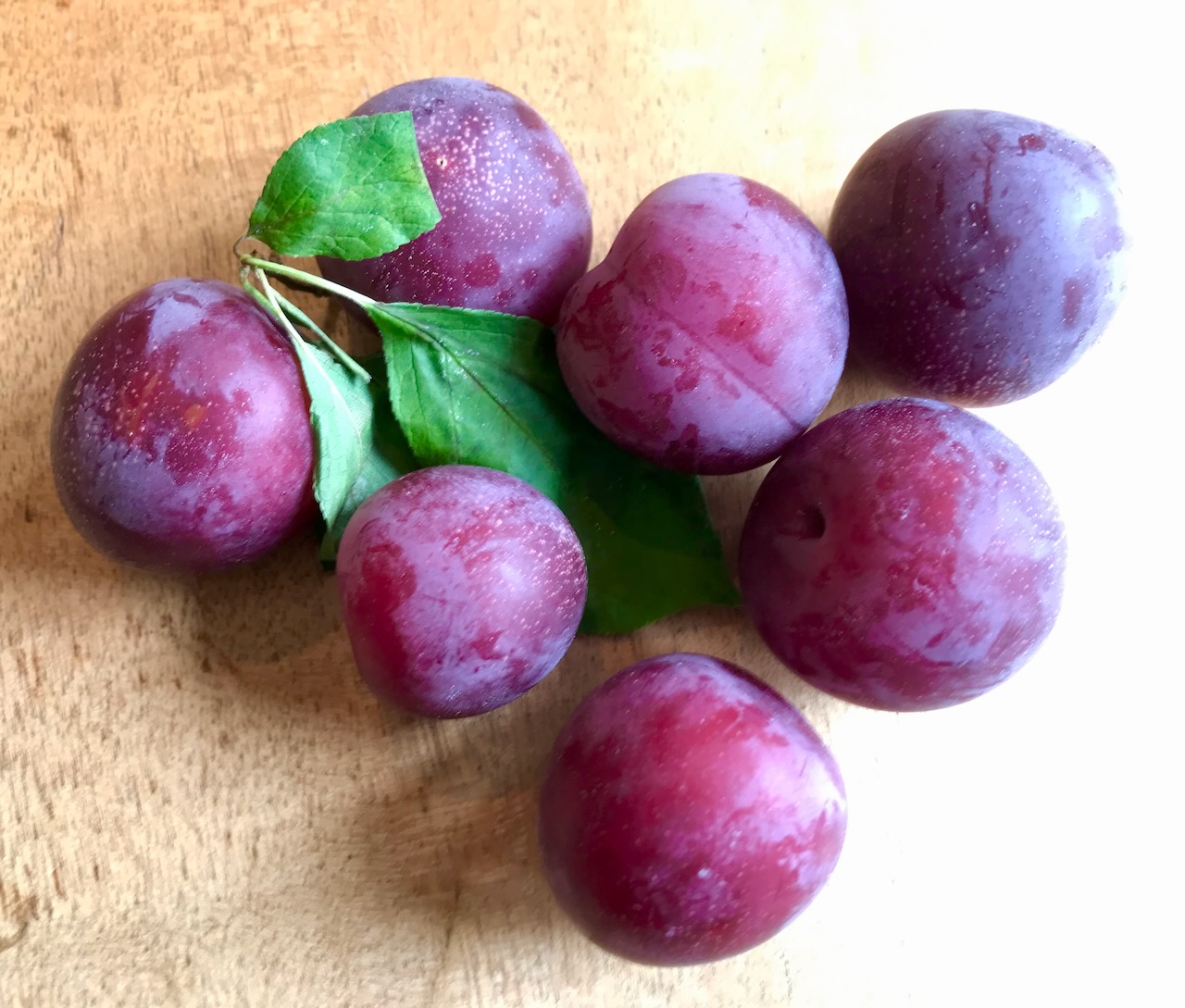
The peaches were good, but in my memory the plums were even better. There was a row of plum trees right outside our front door, along the edge of the peach patch. In early June, as school was ending for the summer, those plums came to full purple ripeness. They were the most delicious thing I’d ever tasted, and not only because they belonged to T and not to me. Years later, I asked T’s son Doyle if he remembered that row of plums and if he knew what kind they were. They were Methleys, he said. For years after I moved to California, I kept asking at farmers markets — overflowing with peaches and plums in the summer — whether they grew Methleys. There were many varieties in the bounty of fruits and nuts and flakes that California produces, but nobody grew Methleys.
My neighbor Diana Arsham heard my rhapsodic memories about Methley plums, and set out to do something about it. Here’s her story.
A plum like no other
By DIANA ARSHAM
IT all started in the winter of 2010 with a conversation about childhood memories. Mine: While alone in the garden of my great aunties’ midwestern farm, I walked into a vibrant pink flowering peony bush just my 5-year-old height. Likely I had been drawn to Its iridescent glow in the warmth of the mid-afternoon sun — and of course by the intoxicating scent of its fully flowering ripeness.
My friend Thomas shared his memory of walking out his front door across a small town road lined with Methley plum trees — “a plum like no other,” or at least that’s how he had so fondly remembered the Methley. He recounted how, after moving to California, he had searched for the plum locally in the Bay Area, hoping to relive his early childhood experience. Still longing for the plum like no other, he learned that the local growers had not heard of the plum, let alone grown it.
The conversation piqued my interest as an ardent urban farmer cutting back 10-foot camellia bushes in my backyard for new plantings of fruit trees. I knew I wanted to plant plums — a favorite of my husband Gary’s — having struck out on figs, a favorite of my own.
Plums are popular in San Francisco, particularly the Santa Rosa. I was determined also to grow the Green Gage plum, which I favored. And I had recently been told about the local prize of them all, the Beauty, a Japanese plum more red than the usual purple European variety. They all needed about 200 chill hours to bloom and bear fruit. In our mild San Francisco winters, that’s about the maximum chill time. Other fruits need 800 to 1000 chill hours, so we are talking about a special breed.
By January 2011, Thomas, via the miracle of the Internet, had located a source for the Methley. And as luck would have it, it did have a chill hour requirement of 200 hours. Thomas delivered the Methley to our front porch. Bare root, dry and somewhat bedraggled, it had been on a long trip and needed rest and intensive care. As I prepared a soothing compost-enhanced soak for the evening, I told it we were both on the line.
I planted the Methley in the ground next to a stand of five-foot Shasta daisies (named for Mt. Shasta and hybridized by Luther Burbank), where it got the early sun in the first part of spring. The Methley bloomed its first spring and I dutifully removed all of its blossoms, encouraging it to continue strengthening its root system, branches and trunk.
This year, although initially full of blossoms due to a very late series of rain showers, the Methley set six plums, though only five ripened and turned red.
“Not the right color,” Thomas declared. “It’s not ripe.” Or maybe not the right species, or maybe an inadequate growing environment, I thought. Full of performance anxiety, I also wondered how I was going to keep the plums safe for the next couple of weeks to fully ripen. By now the rains had ended and I had headed off droves of insects by applying Safer soap. But could the Shasta daisies send out a strong competing scent to confuse predators in the form of birds, raccoons and rats? Just to play it safe, I squirted Critter Ridder on the Japanese boxwood at the north end of the bed. And said a prayer.
By the first week of July, while continuing to read up on the care and feeding habits of the Methley, I decided to harvest the plums. Early one morning I sat straight up in bed, knowing it was time. Sure enough, flower pots on the fence so very close to the plum trees had been knocked over by invaders in the night.
Yes, they were a dark purple! Gary and I tasted one. It was very different — dense, with a grape-like texture, jammy almost. It was delicious, but was it too ripe? How are they supposed to taste?
Later that day, I stopped by Thomas’s gallery to give him a tiny half of the harvest. I was ready to tell him my list of triumphs in getting the Methley to harvest, yet prepared to have him find it not as good as his childhood memory. How could it be? Before I could finish the story of my trials and successes, his 8-year-old hand dove into the basket. A second after he popped the first Methley into his mouth, he fairly yelped: “That’s it — the plum like no other!”
 The Esto Herald