Archive

Food

The Balabans owned a cattle ranch outside Bonifay they called Lookout Plantation.

ESTO HAD NO Jews or Catholics when I was growing up, and nearly no Yankees or Republicans. The same was true for most of Holmes County. But there was one Jewish family, the Balabans, who owned a farm outside the county seat of Bonifay.

Steve Balaban was in our class from first through sixth grade, when his family moved north. He had an older brother, Mike, and a younger sister, Rachel.

I always wondered how they ended up in Bonifay — even more so after reading last fall about their Aunt Judy Balaban’s death in the Hollywood Reporter. During her glamorous long life she dated actors Montgomery Clift and Merv Griffin, married Tony Franciosa and was a bridesmaid at Grace Kelly’s wedding to Prince Rainier of Monaco. Her father, Barney Balaban, was president of Paramount Pictures from 1936 to 1964. Her brother Red Balaban was a noted jazz musician. The actor Bob Balaban is her first cousin.

I wanted to know more. Fortunately, Steve and I reconnected last year while we were planning our 50th high school reunion. It seemed a little strange that someone who’d left long before we graduated would be interested in the reunion. But it soon became clear that Steve had fond and formative memories from his early years in the county, and so did the rest of his family.
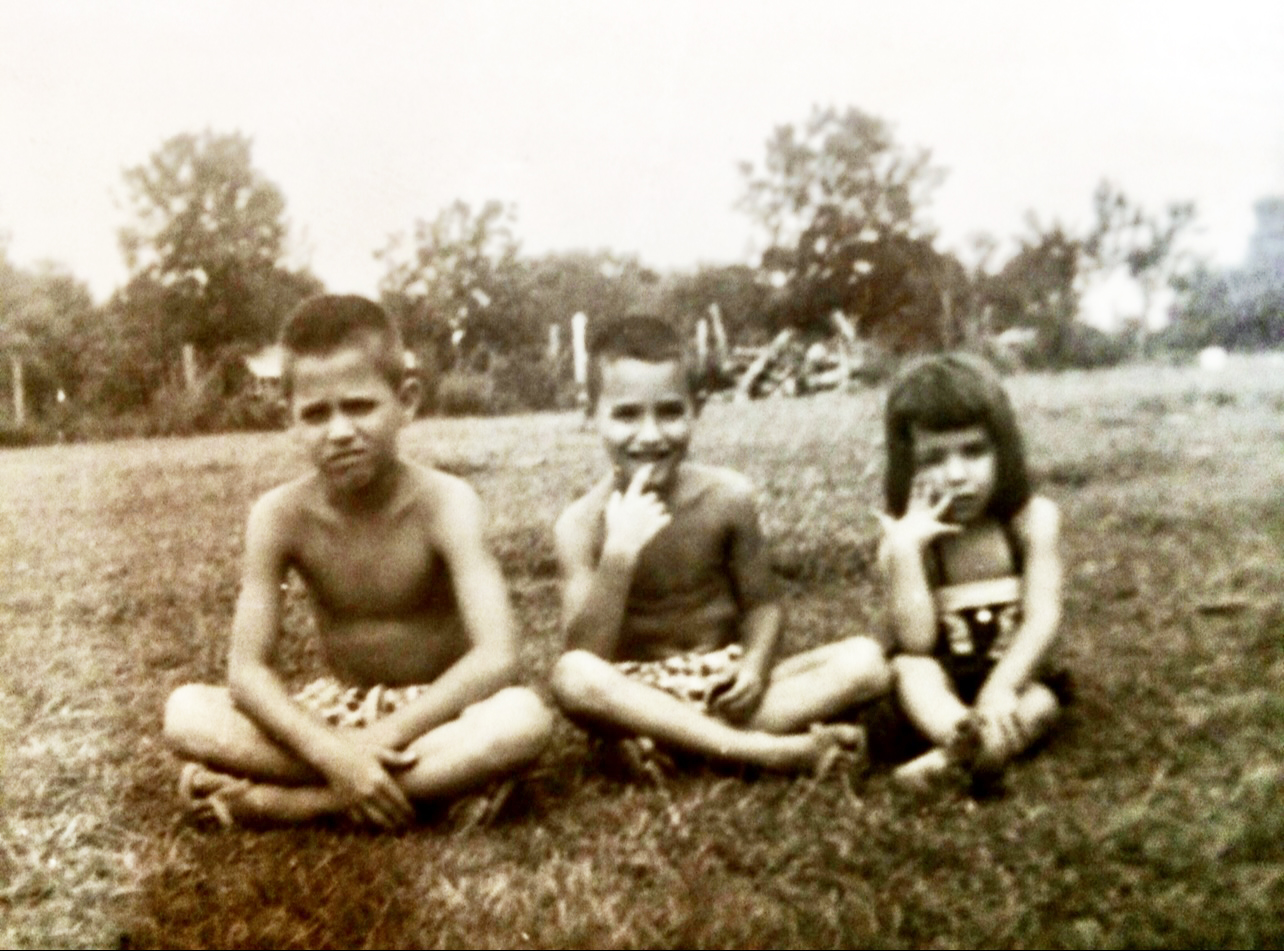
Mike, Steve and Rachel Balaban growing up on the farm.
Read More
At a fish fry with stepsister Cindi and stepbrother Wayne in his barn.

I COMPLAINED that nobody has a fish fry anymore when I’m home in Esto, our traditional excuse for getting together with kinfolks and neighbors. My stepbrother Wayne said he still fished — just come on by on Saturday night. And so we did.

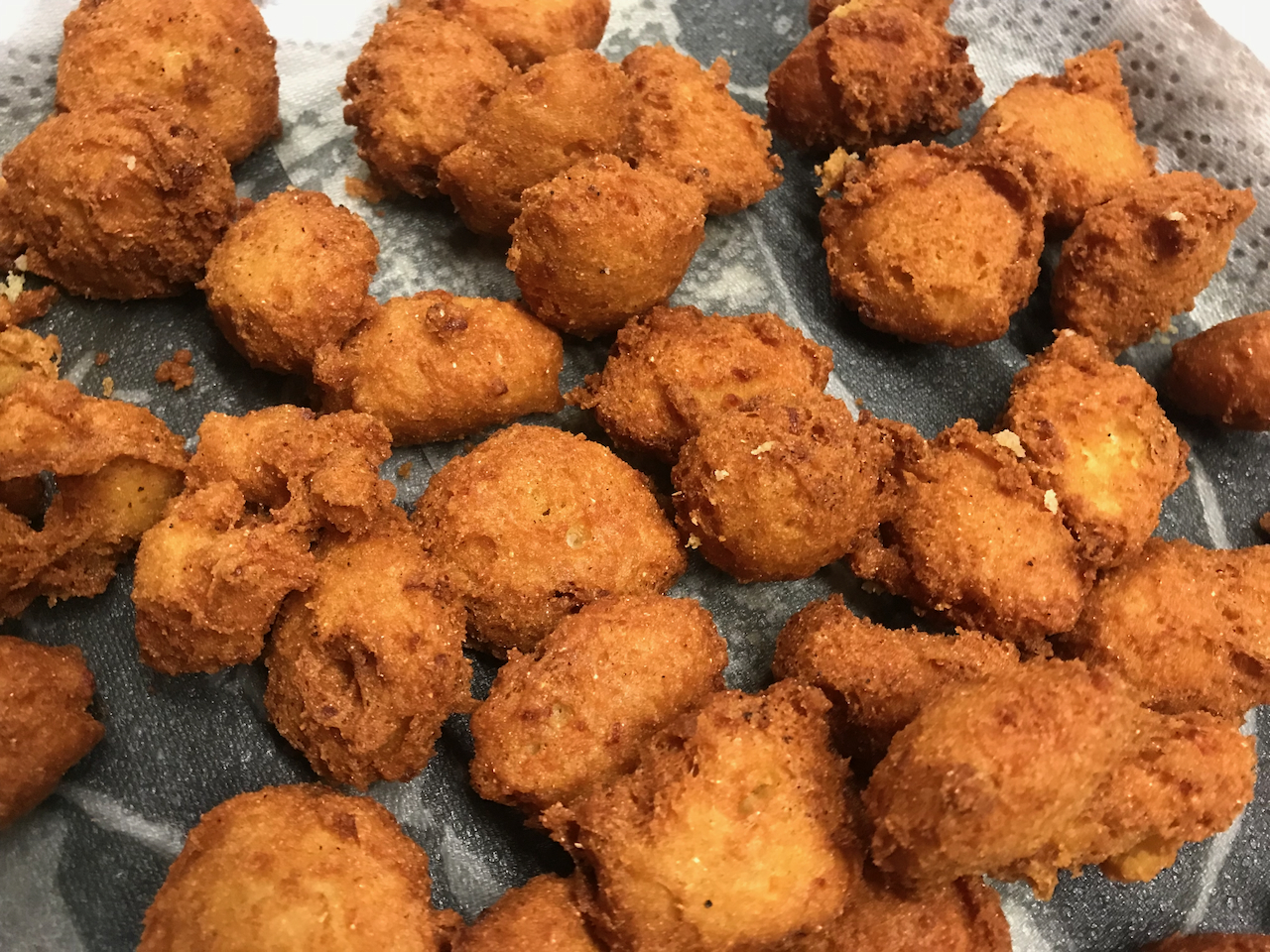
Wayne fries fish — plus French fries and hush puppies, of course — out under the barn in his back yard. It’s just up the Old Esto Road and across the state line in Black, Alabama. He invited some of his buddies from the Black Volunteer Fire Department, too, and we had a feast.

After we’d eaten, one of the firemen edged over to ask, “So you live in San Francisco?” Uh-oh, I thought, here we go with the gays again. But the bogeyman had changed. He fairly hissed: “Isn’t that where Nancy Pelosi is from?”

Wayne’s wife Lynne suggested a photo and slyly posed us in front of an Alabama banner with the stars and bars. “Show that to Nancy Pelosi,” said Wayne.

Frying fish and hush puppies under Wayne’s barn.

That was in 2018. Wayne promised there’d be more fish to fry when I made it home again. When I finally got back last fall, he had been diagnosed with lung cancer, the same fate that befell his father, Bill Henderson, my stepfather, after a lifetime of smoking. Bill insisted as he was dying that smoking had nothing to do with his medical problems and that if he had it all to do over, “I’d smoke ’em all again.” I asked Wayne if he felt the same. “I’d smoke one right now from here out to the highway,” he said as we sat on his front porch watching the sun set.

Our sister Cindi called to say that Wayne died this afternoon. I will miss him, and his hush puppies, and the way we managed to keep a connection despite the great distance between us.

Hush puppies hot out of the fryer.

OBITUARY: Wayne Edward Henderson (1950-2024)

cake

Jeanette Wells Berry (right) and her sister Louise Wells McGowan with a 16-layer chocolate cake at John Clark Park in Esto.

GROWING UP IN ESTO, we always had plenty of good food. Some of the best was served up when the neighbors got together for a fish fry, or after church at an old-fashioned dinner on the grounds — lately served in the air-conditioned fellowship hall.

The ladies in Esto were always especially good at baking cakes. I remember Lane cakes and fruitcakes at Christmas, coconut cakes stacked high, red velvet cakes white on the outside and bright red on the inside, lemon cheese cakes — none of them better than a simple pound cake with a raw streak. Best of all for really special occasions was a towering chocolate cake made of many thin layers, with fudgy crystalized chocolate frosting between every layer and all over the outside. It had more frosting than cake.

So it was a happy surprise to turn to the food section of The New York Times, no less, and find a feature on Southern cakes — dateline Hartford, Alabama, just 10 miles north of Esto — celebrating what they called the “Chocolate Little Layer Cake” as a specialty of our corner of the country. That it is.

MORE: “Stacked Up Southern Style

blueberries

Dear Mary,

WHEN I WAS A LITTLE BOY growing up in Esto, there was a blueberry patch down the hill and across the highway that ran in front of our house. It was on land owned by U.T. Kirkland. Those initials were all the name he had, but he was a kind-hearted, hard-working farmer whose wife Delma — I called her Big Mama — kept me in the years before I started school. (She also taught me some of my most important early lessons. When I turned 5 and got one of those sit-down blackboards, I sat right down and wrote my first word: S-H-I-T. She wouldn’t say it, but she frequently spelled it, and apparently I had been paying attention.)

T and Big Mama were all-important to me. My mother left early every morning to drive across the Alabama line to work in the Van Heusen shirt factory in Hartford, and my father died young just as I turned 4. I loved T and Big Mama. And blueberries always bring them back to me.

Thank you for that perfect blueberry flip you shared last night — and for the memories that came with it.

E. W. Carswell: He writes about home — his home and mine.

E. W. Carswell: He writes about home — his home and mine.

THE ADVERTISER arrived in today’s mail.

Twenty-five years out of Esto and 3,000 miles away in California, I’m still always happy to get the weekly newspaper from home.

Absence makes the heart grow fonder. Aging breeds nostalgia. And now I better understand the complaints from people who had moved away that I used to hear when I worked at the Holmes County Advertiser as a teenager. “I never know anybody you write about anymore.” “I have to figure out who their mamas are to place them – or their grandmamas.” “The only names I know are in the obituaries.”

Then on the editorial page of this week’s issue I get to E. W. Carswell’s column. This week it’s titled “The Smells of Summer.”

It takes me immediately back home. And it reminds me it’s the little things I miss the most.

He writes: “The smell of summer is a reminder of the good things summer has made possible ­– mellowing pears, magnolia blossoms, fresh turpentine, overripe muscadines, fresh-sliced tomatoes, new-crop Southern peas or speckled butterbeans being cooked with slices of ham.”

“Summer is the smell of the old chinaberry tree after its waxy fruit had started dropping to the ground. It is the smell of fresh-sliced watermelon or cantaloupe.

“Unforgettable is the smell of peanut hay, curing in the sunshine. And freshly dug peanuts being boiled outdoors in a wood-fueled pot.”

I had read this column before. In fact, Judge and I included it in Commotion in the Magnolia Tree, the first collection of his columns we published in 1981. Maybe I even read it when it was first published in his regular column on the editorial page of The Pensacola Journal back in the ’70s. I might have read it again since the Advertiser started reprinting some of his columns a few years ago.

But it didn’t matter.

Like the smells of summer he was describing, Judge Carswell’s writing has a timeless quality about it. It has the feeling of home – his home, and my home too.

This week I recognize something familiar in the Advertiser. I recognize the smells of home.

U.T. Kirkland in his peach orchard on Highway 79 in Esto.

By E.W. CARSWELL

ESTO has no Peachtree Street, but it came close for a few years in the 1960s and ’70s. Commercial peach orchards sprang up in the surrounding area after horticultural scientists at the Florida agricultural experiment stations developed peach varieties that appeared to be adaptable to the North Florida climate.

To be successful, however, a marketing facility was needed. That need led to the construction — with the help of a U.S. Farmers Home Administration loan — of the Esto Fruit and Vegetable Market. The facility was equipped with warehousing, refrigeration, grading, weighing and packaging equipment. Marketed and shipped from the facility, besides peaches, were watermelons, tomatoes, peas, beans, cucumbers, squash, collards, okra and a few plums.

Almost from the beginning, however, growers were unable to find adequate seasonal labor for producing and harvesting the crops, particularly peaches, which required cultivation, fertilizing, the application of insecticides and pesticides, and hand pruning, as well as harvesting.

Major growers included John W. Clark, Frank Thweatt, Doyle and U.T. Kirkland, Jesse Mills and Willis Hardy.

Fire destroyed the Esto market after a few years, and growers reduced their production level to that required to meet regional needs. Fortunately for those who continued, Northwest Florida and South Alabama communities continued to gain population, thus creating added demand for regionally produced fruit and vegetables. Esto area growers had proved that quality production could be achieved locally, if undertaken on a scale sufficient to attract needed labor.

And the Esto peach continued to find a favored place in regional produce shelves.